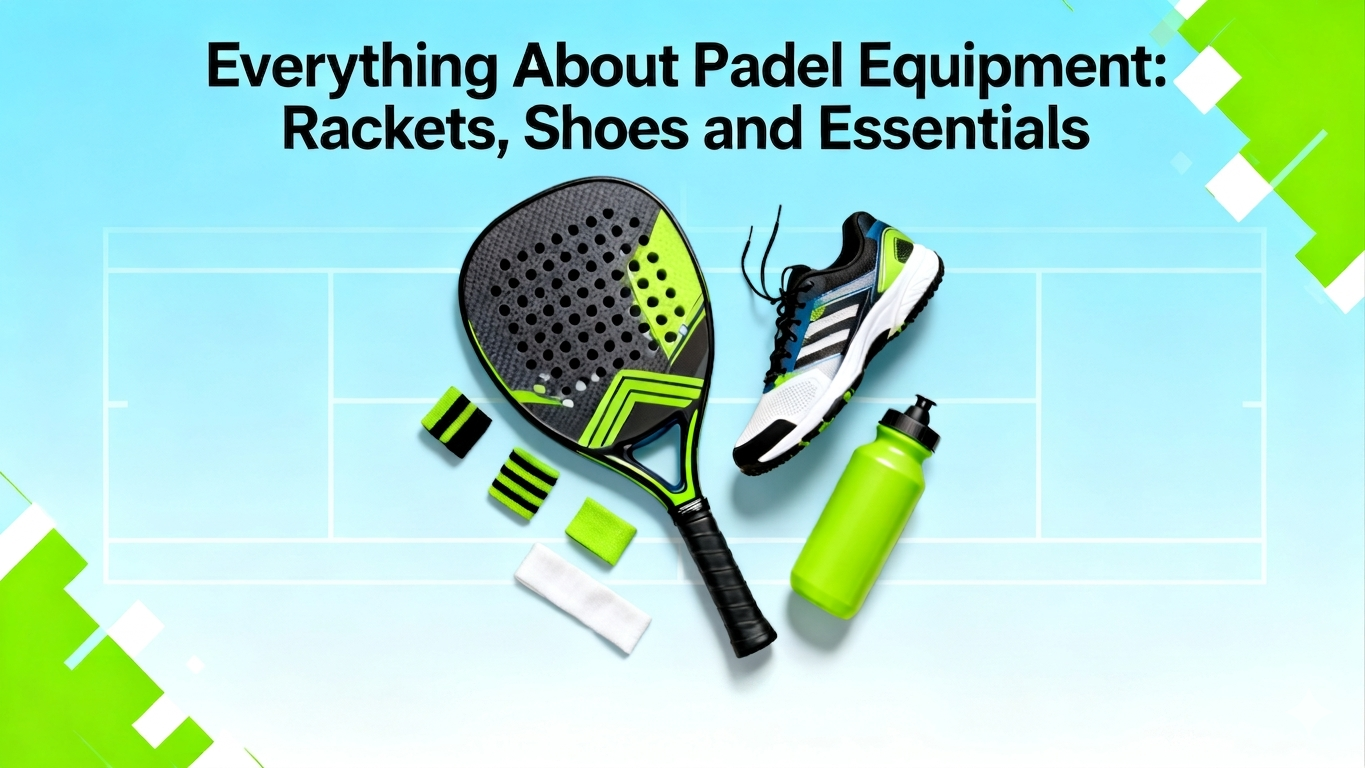
When playing padel, the shape of the racket affects your swing. The sole of your shoe determines whether you grip the court or slide through it on a volley. Foam core of the racket? Changes the way every shot feels when it leaves your face. And the bag you throw everything in after a game can either store your gear or quietly destroy it in the Indian heat.
Padel gear decisions are made overlappingly. If you hit the racket incorrectly, your arm will pay the price. Wearing the wrong shoes can cause ankle problems. Skipping small accessories allows you to replace expensive gear sooner than necessary.
Your complete Padel equipment
| Device | the purpose | Features | Regular price |
| padel racket | Main play equipment | Round, teardrop or diamond shaped. EVA or FOAM core | ₹5,000~₹40,000+ |
| padel shoes | grip and movement support | Lateral stability, cushioned sole and padel-specific tread | Depends on brand |
| padel ball | gameplay | Less pressure and softer bounce than a tennis ball | sold in cans |
| padel bag | Carry and protect your equipment | Thermal racket compartment, shoe pocket and accessory storage | Depends on size/brand |
| accessories | Comfort and racket protection | Overgrip, wrist strap, sweatband, racket protector | ₹100+ |
Padel equipment is divided into three tiers. The first layer is the non-negotiables: rackets, shoes, and balls. The second layer is a dedicated bag, overgrip, and wrist strap. The third layer is nice-to-have things like racquet protectors, certain apparel, and sweatbands.
Unlike tennis, padel equipment operates under a different set of physics. The racket has no strings. The court has a playoff wall. The ball bounces low. All gear is designed with these differences in mind, and replacing tennis gear with padel gear will impact your game in immediately noticeable ways.
racket
Padel racquets are not at all similar to tennis racquets. A sturdy model with a foam core and a striking surface made of carbon fiber, fiberglass, or a blend of both. Small holes are drilled into the face to reduce air resistance and allow for spin.
A racket’s performance is determined by three variables: shape, weight, and core material.
shape: The shape of a racquet is the single biggest factor in determining how the racquet feels in your hand.
round racket It has the largest sweet spot, located low in the center of the face. It is forgiving on off-center hits and provides excellent control. If you’re new to Padel, start here. If you’re a defensive player who wins rallies with placement and patience, stay here.
teardrop racket Shifts the sweet spot slightly higher for a blend of power and control. This is the perfect intermediate padel racket shape for players who want to hone their technique and add punch to their smashes without losing precision. Most club-level players eventually gravitate toward teardrops.
diamond racket The head is heavy and the sweet spot is high. Generates explosive power with overheads and volleys, but requires consistent technique. Mishits sting. If your timing isn’t sharp, you’ll get frustrated with the diamond shape.
weight
Padel rackets range from 340g to 385g. A lighter racket puts less strain on your wrists and is faster to operate. A heavier racquet produces more power, but your arms will tire more quickly.
Most recreational players in India do well between 355g and 370g. If you have elbow or shoulder problems, reduce your weight.
Core material
Two common foam cores are EVA and FOAM (polyethylene). EVA is denser for a firmer feel and more control. FOAM is softer, gives a trampoline-like pop, and adds power and comfort. Some manufacturers now use blended or multilayer cores to split the difference.
What about the price?
The price of Padel equipment varies widely depending on the brand, material, and where you buy it.
| category | Price range (₹) | material | Who is it for? |
| entry level | ₹5,000~₹9,000 | Fiberglass face, soft EVA core | Beginner, casual player |
| midrange | ₹9,000~₹18,000 | Carbon/fiberglass blend, dual core | Regular player, improver |
| Advanced/Pro | ₹18,000~₹40,000+ | Full carbon fiber, multilayer core | competitive and advanced |
Padel shoes: Why you’re not satisfied with your regular sneakers
Wearing padel puts stress on your feet. This sport requires constant lateral movement, explosive first steps, sudden stops, and quick turns. Running shoes are designed with forward movement in mind. Tennis shoes are not made for specific padel court surfaces. You need padel shoes that are designed for the way this sport actually moves your body.
What is the difference between padel shoes?
Sole pattern: The padel court uses artificial grass filled with sand. Padel shoes have a herringbone or modified omnidirectional tread pattern designed for grip on this surface. My running shoes slip. Tennis shoes designed for clay or hard courts wear unevenly.
Lateral support: The side-to-side movement of padel puts a lot of stress on your ankles. Padel shoes feature reinforced sidewalls and a wide base to keep your feet stable during cuts and lunges.
Cushioning: ASICS uses GEL technology in the heel and forefoot. The purpose is to protect the knees and joints by absorbing the shock caused by sudden stops and hard landings.
Weight: Court shoes for padel tend to be lighter than standard tennis shoes. It ranges from 300g to 380g.
Padel ball: different from tennis ball
Padel balls are similar to tennis balls, but they are not interchangeable. Padel balls have lower internal pressure, creating a softer, lower bounce suitable for short courts and wall play dynamics.
Using a tennis ball on a padel court disrupts the overall flow of the game. Wall rebound becomes unpredictable. You lose control over shot placement.
padel tennis bag
Once you’ve invested in your racket and shoes, you’ll need something to carry and protect them. Padel tennis bags are specifically designed for this gear. It’s not a gym bag with a racket shoved inside.
A good padel bag includes a thermally lined compartment that protects your racquet from extreme heat. India’s climate means summer temperatures can reach well above 40°C. Heat damages the racquet’s foam core, softening the material and changing its playing characteristics. Insulated bags prevent this.
Features required in a padel bag.
- Dedicated racket compartment with thermal lining.
- Separate shoe pocket to keep sweaty shoes away from clean gear.
- Accessory pocket for overgrip, wristband, water bottle and cell phone.
- Padded strap for comfortable carrying.
little things that make a big difference
Overgrip: The factory grip on your racket will wear out. The overgrip wraps around the base grip, restoring stickiness and absorbing moisture. Each piece costs between ₹100 and ₹300 and must be replaced every 5 to 10 sessions.
Racket protector: The frame of a padel racket is subject to impact during play. A protector tape along the edge of the frame absorbs this impact and extends the life of the racket.
Wrist strap: All padel rackets have a hole at the bottom of the handle for a wrist strap. Please use it. The strap securely secures the racket in your hand during aggressive swings and prevents the racket from flying across the court and potentially injuring other players. Some tournaments require them.
Sweatbands and wristbands: Sweat management is important in the Indian context. The wet grip slips. Wristbands keep sweat away from your hands, and headbands keep sweat out of your eyes. Cheap and effective.
Buying used Padel equipment: wise or risky?
Although the Indian padel market is still young, a secondary market for used padel equipment is beginning to form. Outlets like PadelOutlet.in are already listing used rackets (graded by condition) at deep discounts of up to 30-40% off the original price.
Used padel equipment is a smart entry point, especially for beginners who don’t want to shell out more than ₹15,000 before knowing if they want to continue with the sport. There are a few things you should check before purchasing:
Frame integrity: Run your fingers along the entire edge of the frame. Cracks, even hairline cracks, can compromise the racket’s structural strength and deteriorate quickly.
Foam core condition: Press the surface of the racket. If it feels dead or too soft compared to a new racket of the same model, the core has deteriorated. Usually caused by exposure to heat.
Grip condition: Worn base grips are easy and inexpensive to replace. Even if the frame and core are solid, don’t worry.
shoes: Be wary of second-hand padel shoes. As the outsole tread wears and loses grip, it loses traction and stability. The cushioning also compresses over time and does not recover. Buy new shoes whenever possible.
Padel equipment-based selection method
Your skill level will determine your choice of padel equipment. If a beginner spends too much money on pro-level gear, their progress will not accelerate. If you spend less as a regular player, you limit your potential. Here’s the breakdown by level:
Beginner (0-6 months): Choose a round racket priced between ₹5,000 and ₹9,000. Pair with entry-level padel shoes (₹5,000 to ₹7,000). Add a basic bag, overgrip, and ball can. Total investment: ₹12,000 to ₹18,000.
Intermediate (6-18 months): Upgrade to the best intermediate padel racket in teardrop shape, available between 12,000 yen and 20,000 yen. Invest in better padel shoes with advanced cushioning and lateral support (₹8,000 to ₹12,000). Bags and accessories remain the same. Total investment: ₹22,000 to ₹35,000.
Advanced (18 months and above): You already know what you want. Professional level racquets, premium footwear, high quality padel tennis bags and a comprehensive accessory kit. Budget for full setup is ₹40,000+.
Where does India stand?
The Indian padel equipment market has matured rapidly. Three years ago, to buy a padel racket in India, you had to import it or rely on a few online stores. Currently, specialty retailers such as PadelOutlet.in, Racquets4U and SportsJam carry the complete catalog of HEAD, Babolat, Bullpadel and Adidas. Our prices are even more competitive and our delivery infrastructure covers most major cities.
The challenge remains access to padel courts. But that is changing rapidly. At the heart of this is a platform like Khelomore. Khelomore allows you to search and book padel courts (and over 30 other sports) in cities across India. Open the app, select a slot, and you’re ready to play.
If you’ve assembled your padel equipment and are itching to put it to use, book a padel court at Keromore and join us on the court this week.
final thoughts
Padel gear isn’t complicated, but it does require thoughtful choices. A compatible racket will improve your game. Proper shoes protect you. Using the right accessories will extend the life of your gear and keep you comfortable during long sessions in the Indian heat.
Let’s start with the essentials. Buy the best padel equipment you can reasonably afford at your current level. Upgrade as your skills and efforts grow.
FAQ
How long does a padel racket last?
Padel racquets last from 6 to 18 months with regular play (2 to 5 sessions per week). Even without visible cracks, foam core loses its elasticity over time. A dull sound and loss of power on ball contact are the most obvious signs that it needs replacement.
Can I wear tennis shoes to play padel?
Clay court tennis shoes work as a temporary replacement, but they are not made for padel’s artificial turf or sand surfaces. Padel shoes have a deeper herringbone tread for better grip on the sand and a lighter construction for added flexibility. Therefore, change into specialized padel shoes as soon as you start playing the sport.
How do I store my padel racket in hot weather?
Place it in a thermal bag, avoid direct sunlight, and never leave it in a parked car. Heat above 40°C will soften the EVA or FOAM core and permanently change the playing characteristics of the racquet.
Is pressureless padel ball suitable for practice?
Non-pressurized balls last much longer than pressurized balls because they bounce due to a thicker rubber core rather than internal air pressure. Cost effective for coaching drills and ball machines. However, for competition and technique development, pressurized balls provide the true feel and bouncy action you need for precise training.
What is the right weight of a padel racket for beginners?
Beginners should start with a racket between 340g and 360g. A lighter racket reduces fatigue during long rallies and reduces stress on your wrists and elbows when improving your technique. As your swing mechanics improve and your arm strength increases, you can move on to heavier racquets for more power.
PakarPBN
A Private Blog Network (PBN) is a collection of websites that are controlled by a single individual or organization and used primarily to build backlinks to a “money site” in order to influence its ranking in search engines such as Google. The core idea behind a PBN is based on the importance of backlinks in Google’s ranking algorithm. Since Google views backlinks as signals of authority and trust, some website owners attempt to artificially create these signals through a controlled network of sites.
In a typical PBN setup, the owner acquires expired or aged domains that already have existing authority, backlinks, and history. These domains are rebuilt with new content and hosted separately, often using different IP addresses, hosting providers, themes, and ownership details to make them appear unrelated. Within the content published on these sites, links are strategically placed that point to the main website the owner wants to rank higher. By doing this, the owner attempts to pass link equity (also known as “link juice”) from the PBN sites to the target website.
The purpose of a PBN is to give the impression that the target website is naturally earning links from multiple independent sources. If done effectively, this can temporarily improve keyword rankings, increase organic visibility, and drive more traffic from search results.