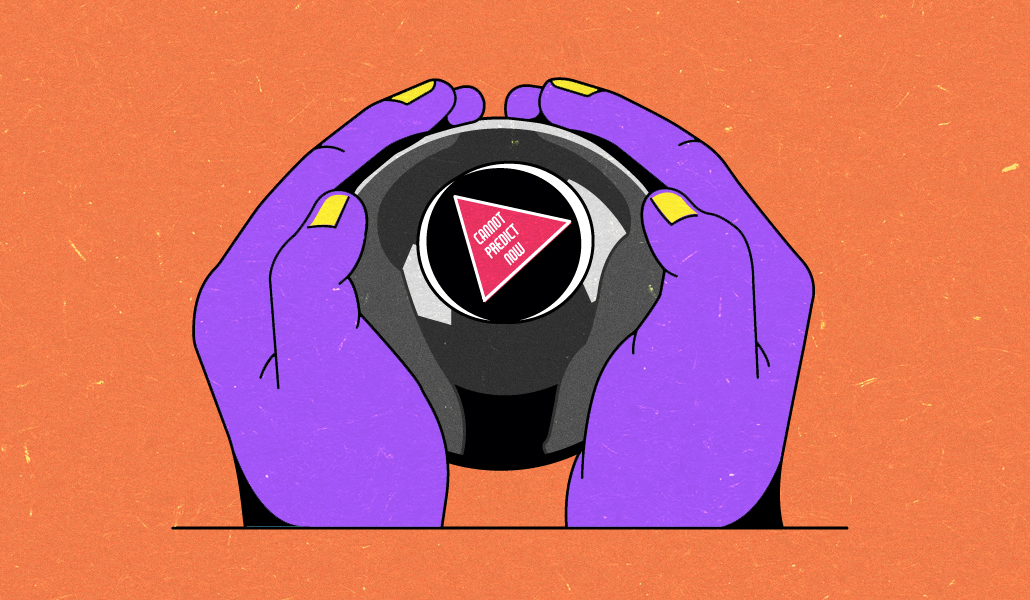
For the better part of a decade, consumer goods companies hired marketers who could optimize their media plans. They are now hiring people who can save the brand.
When Smuckers searched for a new CMO earlier this year, it didn’t find a performance marketer. The company has hired Katie Williams, the former U.S. CMO of Haleon and a consumer health veteran who spent her career building brands such as Advil, Sensodyne and Centrum. Hormel, which had never had a company-wide CMO, created the role in December and hired Jason Levine, a former Mondelez alumnus who was in charge of marketing Oreos and Ritz, to fill the role. Burger King’s new CMO Joel Jasinski, who was hired from Applebee’s in early 2025, immediately fired the brand’s mascot and began a brand reset based on customer feedback, describing the whole thing as not a “marketing campaign” but a fundamental rethinking of what the brand stands for.
These are not the profiles CPG was pursuing five years ago. As the platform grew and retail media exploded into the early 2020s, the marketing function was reshaped in its image. Hiring credentials like programmatic fluency, conversion optimization, and attribution modeling started to look more like sophisticated media buying than brand management. The logic was sound enough. Digital spending is increasing exponentially, the pressure for quarterly ROI is real, and the ability to prove that marketing is working is more important than ever. In the end, the problem was that proving that marketing works and actually building a brand aren’t necessarily the same thing.
“Hurrying performance across categories at the expense of visibility is a classic example of throwing out the baby with the bathwater,” said Scott Schanberg, president and CEO of independent media agency Milemarker. “I heard people start saying that everything became about the lower funnel and all media was about performance. With the advent of advanced lower funnel metrics, CPG was probably the industry most guilty of that.”
Changes were also reflected in the roles themselves. In 2019, Unilever completely abolished the CMO role when Keith Weed left after nearly a decade, replacing it with a new title of chief digital and marketing officer, intentionally putting “digital” at the beginning of the title. Kimberly-Clark went a step further by consolidating marketing and digital functions into a single role: chief marketing officer and chief digital officer, held by a single executive. And when the industry started asking what marketing was actually for, many companies came up with a clear answer: growth. According to Boston Consulting Group’s Benchmark of Major Consumer Goods Players, nearly 70% of company leaders said they held a chief growth officer or equivalent role. Its responsibilities extend beyond traditional marketing to include insights, innovation, digital commerce, net revenue management, and more. In other words, CMO was secretly rebranded and ceased to exist.
Fast forward to this point and the pendulum has swung. The same companies that spent the better part of a decade subordinating their brands to performance are now realizing that consumers don’t feel anything when they look at their products, and no amount of attribution modeling can solve this problem.
“CPG CMOs are navigating multiple social media channels, new platforms like ChatGPT and connected TV, and retail media networks,” said Greg Carlucci, senior director analyst in the Gartner Marketing Practice. “All of this has further fragmented the lanes in which they operate. This reduces the competitive advantage that CPG manufacturers have enjoyed in the past, but now provides an opportunity for small and medium-sized brands to take advantage of it.”
Mathematics has caught up with them. Since 2023, total shareholder returns for the world’s largest food and beverage companies have declined by about 7%, even as the S&P 500 index has expanded by 9%. Volume growth across the sector is less than 1% per year. Last year, private label dollar sales grew nearly three times faster than their branded counterparts.
What these numbers suggest is that decisions are looming over the next decade. CPG companies built their marketing capabilities for a world where pricing power is strong and digital channels make everything measurable. While brand equity was difficult to quantify, conversion rate was not. Now, pricing is back on track, volumes are stagnant, and, according to McKinsey, 61% of shoppers say price is more important to them now than it was two years ago, but they’re making sharper trade-offs about how much a brand is actually worth to them. The era of performance marketing didn’t destroy consumer goods brands. You just have less to fall back on when the conditions you were working in changed.
“Over the past few years, CPG has been optimized for measurables,” said Mya Horn, CMO at independent marketing agency Broadhead. “What we’re seeing now are fixes to brands that are meaningful to people, rather than what actually drives growth: brands that convert efficiently.”
None of this completely negates performance marketing. A better framework would be a rebalancing, an acknowledgment that the industry is over-rotated and brand equity is really hard to rebuild once it is degraded. Hormel didn’t create a CMO role because its brand was too strong, and Smucker’s didn’t move on as a consumer health marketer because it needed to revise its media plan. Burger King didn’t hire a 20-year veteran in quick service because its numbers were strong. When Jasinski joined the company in the first quarter of 2025, same-store sales had just turned negative.
The objectives they employ are all the same. Someone who understands the purpose of the brand and not just how they spend their money behind the brand.
“I see connected TV as a channel for CPGs to bridge the gap between the bottom of the funnel and the top of the funnel, allowing them to measure how their brand is being viewed while rethinking how to achieve both,” Schanberg said. “Consumers have always had a strong affinity for brands, and marketers need to take that into account when telling their stories and when choosing who to tell them.”
Numbers you need to know
76%: Percentage of year-over-year growth in unique visitors for ChatGPT US (January 2025 to 2026).
16%: Percentage of full-time staff that Snap laid off as it invested in AI.
$50,000: New lower minimum commitment required to participate in the OpenAI ChatGPT advertising pilot.
100 million: Roku’s total number of streaming households worldwide.
What we covered
OpenAI quietly launched an advertising manager as it rushes to build its advertising business
OpenAI has perfected its typical platform playbook and is already testing a self-service advertising manager, which will be critical to its ability to quickly scale its advertising business.
OpenAI builds tool to track whether ChatGPT ads convert
As we build tools that enable the platform to expand beyond brand advertising, OpenAI now has a pixel, selectively enabled it for some advertisers in a pilot, and continues to iterate on its capabilities.
‘Absolutely no intention’: Publicis Groupe CEO rules out setting up a Trade Desk rival amid ongoing dispute
On an earnings call this week, Publicis CEO Arthur Sadoun ruled out building a Trade Desk rival, saying a proprietary DSP would be inconsistent with the company’s AI-era strategy of managing data and customer relationships rather than platform infrastructure. So clients who were told to withdraw their spending from The Trade Desk are still waiting to hear where Publicis thinks their money should go instead.
MrBeast is so big that Beast Industries turns down 8-figure brand deals if they don’t fit
Two years after Jeff Hausenbold became CEO of Mr. Beast’s Beast Industries, Fortune 1000 CMOs are now calling the company, not the other way around. That means they have the luxury of choosing the brands and deals that really fit, and turning down those that don’t.
what we are reading
Exclusive: Meta reorganizes Reality Labs to ‘run faster’
According to The Information, Meta is reorganizing Reality Labs’ infrastructure team to build quality assurance and platform capabilities directly into its wearables and VR product groups to speed execution. The reorganization followed significant layoffs in the division, with more than 1,500 layoffs in January and further cuts in March.
Sam Altman’s Second Thoughts
After a man dropped an incendiary bomb on his home and threatened OpenAI staff, CEO Sam Altman called for calm and democratic governance of AI, saying the public’s fears were justified but the rhetoric needed to be de-escalated. According to Platformer, critics have noted tensions in Altman’s position given his decade of issuing existential warnings about AI and OpenAI’s record of lobbying against regulation.
Online age checks begin in Europe
According to Politico, the EU is preparing to introduce an age verification system in the coming weeks to begin tackling child safety online using passport, ID or QR verification methods.
Hollywood is embracing content creators to win back Gen Z viewership.
According to Airmail, Hollywood is currently casting influencers who have landed roles on SNL, Euphoria and major studio projects in an effort to win back Gen Z viewers who are abandoning traditional media.
PakarPBN
A Private Blog Network (PBN) is a collection of websites that are controlled by a single individual or organization and used primarily to build backlinks to a “money site” in order to influence its ranking in search engines such as Google. The core idea behind a PBN is based on the importance of backlinks in Google’s ranking algorithm. Since Google views backlinks as signals of authority and trust, some website owners attempt to artificially create these signals through a controlled network of sites.
In a typical PBN setup, the owner acquires expired or aged domains that already have existing authority, backlinks, and history. These domains are rebuilt with new content and hosted separately, often using different IP addresses, hosting providers, themes, and ownership details to make them appear unrelated. Within the content published on these sites, links are strategically placed that point to the main website the owner wants to rank higher. By doing this, the owner attempts to pass link equity (also known as “link juice”) from the PBN sites to the target website.
The purpose of a PBN is to give the impression that the target website is naturally earning links from multiple independent sources. If done effectively, this can temporarily improve keyword rankings, increase organic visibility, and drive more traffic from search results.