
Arunachal martial arts athlete unable to travel to China for Asian Games
In a disappointing development for promising martial arts athletes from Arunachal Pradesh, their dreams of representing India at the 2023 Asian Games in Hangzhou, China have been dashed due to visa issues. These talented athletes have spent years honing their skills, only to find themselves caught up in a bureaucratic web that threatens to overshadow their hard work and dedication.
Martial arts applicants:
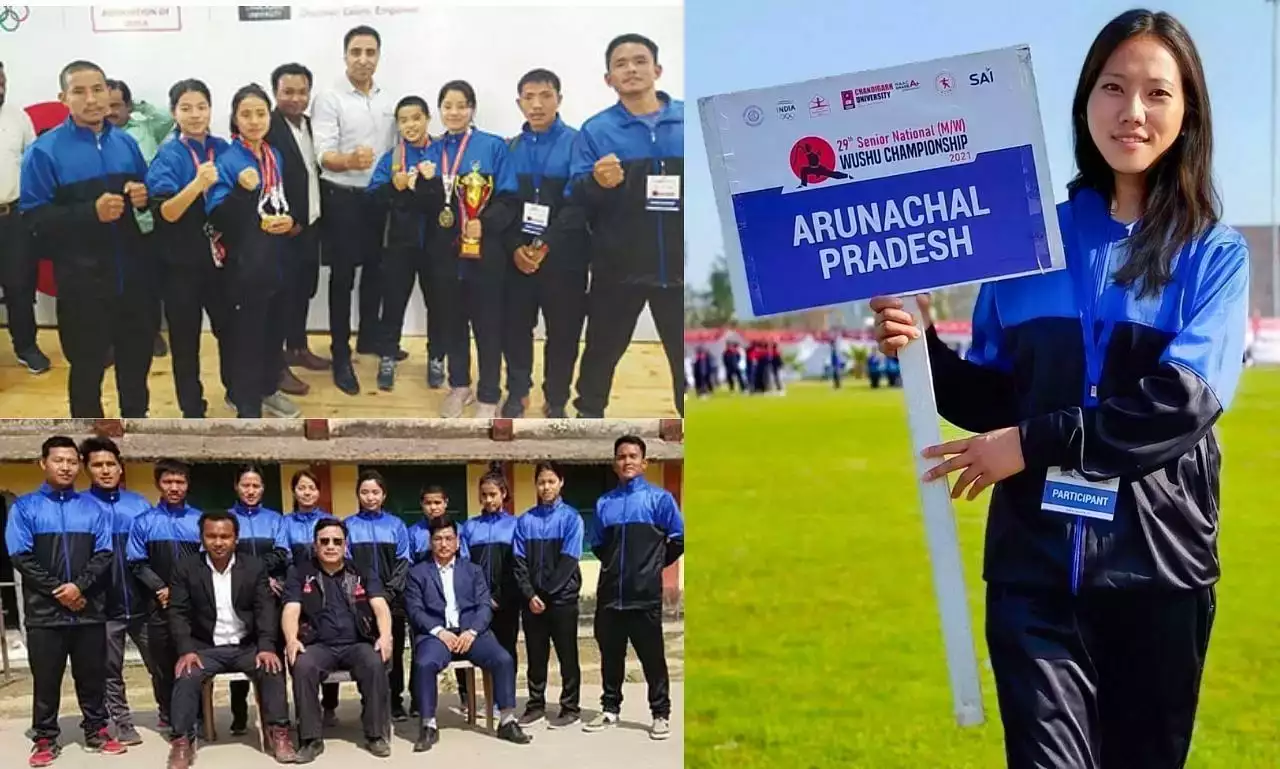
Three female athletes, Naiman Wangsu, Onir Tega and Mepun Lamug, successfully obtained recognition cards that double as entry visas from the Hangzhou Asian Games Organizing Committee (HAGOC). Athletes must then complete the process by downloading their travel documents, which will be verified upon arrival.
However, on the day they were scheduled to depart for the Asian Games, the three athletes from Arunachal Pradesh encountered problems in being unable to download their travel documents. In contrast, the remaining members of the wushu team, consisting of a total of 10 players and coaching staff, did not encounter such difficulties. As a result, they went ahead with their travel plans and left for Hong Kong on Wednesday night, where they took a connecting flight to Hangzhou.
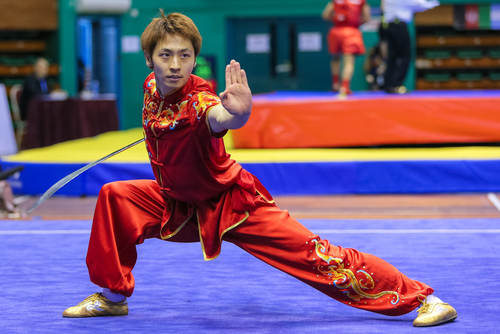
The northeastern state of Arunachal Pradesh has produced highly talented martial arts athletes who have consistently proven their mettle on the national and international stage. These athletes have tirelessly prepared both mentally and physically to compete in the prestigious Asian Games, the pinnacle of sporting achievement for any athlete.
The Asian Games was not only an opportunity to showcase their skills but also to inspire the young generation of Arunachal Pradesh to take up martial arts. The disappointment of not being able to participate in this international event shatters their dreams.
Nationwide support:
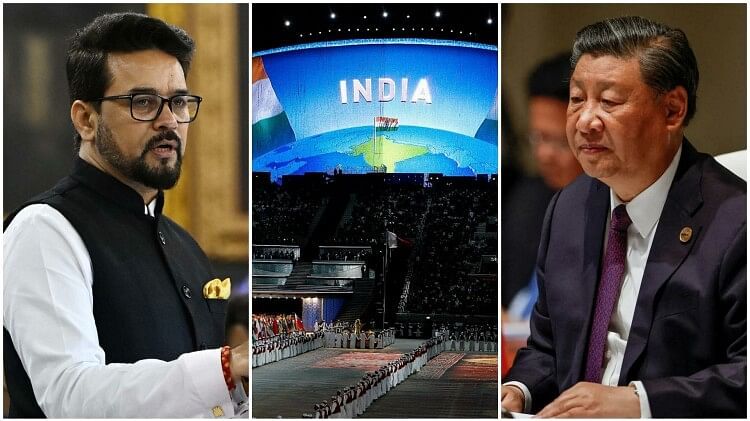
The situation has attracted national attention, with sports authorities and fellow athletes expressing solidarity with the Arunachal Pradesh martial arts delegation. The Indian Martial Arts Association is actively pursuing this issue and seeking a solution through diplomatic channels. India’s Ministry of Foreign Affairs has also been approached to intervene and facilitate visa issuance for the athletes. Union Sports Minister Anurag Thakur on Friday decided to cancel his scheduled visit to the Asian Games after China denied entry permission to Indian martial arts athletes from Arunachal Pradesh. At the same time, the government filed an official protest against this decision.
This unfortunate episode highlights the complexities that often overshadow the world of international sport. The intersection of politics, diplomacy, and sports can have a significant impact on athletes who are mostly driven solely by their passion for their chosen field. This is a reminder that athletes, regardless of their background or nationality, should not become pawns in a larger geopolitical game.
Visa complications:
Visa complications have left athletes and coaches feeling overwhelmed and frustrated. The athletes had submitted all the necessary documents and their participation was supported by the Wushu Association of India. Despite having “stapled visas”, the players were not allowed to board the plane.
In addition to the broader diplomatic tensions, another factor complicating India-China relations is China’s issuance of stapled visas. This practice has been a recurring problem, especially in regions such as Arunachal Pradesh and Jammu and Kashmir. The staple visa adopted by China is a symbolic act of China’s territorial claims, effectively implying that these areas are disputed areas rather than an integral part of India. This practice not only exacerbates diplomatic tensions, but also affects athletes and citizens in these regions, who often face fear and discrimination when traveling to China for sporting events or other purposes. Arunachal Pradesh’s denial of visas to martial arts athletes must be understood in the context of stapled visas, territorial disputes and political sensitivities, highlighting the complexities that pervade the world of sport. This act challenges India’s sovereignty and territorial integrity and is a source of diplomatic tension between India and China.
Stapled visas are a type of visa issued by countries with unique and often controversial diplomatic stances. China’s issuing of stapled visas to Indian nationals and residents of certain regions such as Arunachal Pradesh and Jammu and Kashmir symbolizes China’s refusal to recognize the legitimacy of individuals’ travel documents. Rather than attaching the visa directly to your passport, Chinese authorities attach it separately using a stapler or another attachment.
By issuing stapled visas in these circumstances, China sends a clear message that it does not recognize the area in question as part of India. This stance has exacerbated existing political conflicts and complicated diplomatic relations between the two countries. It also creates practical challenges for individuals traveling to China, who may face uncertainty, delays and discrimination due to fixed visas, hindering their ability to participate in a variety of activities such as sporting events, trade and cultural exchanges.
Diplomatic angle:
Denying visas to these young athletes not only hinders their aspirations but also creates diplomatic challenges. This highlights the ongoing sensitivity in India-China relations, which often spills over into the realm of sports.
The denial of visas to martial arts athletes from Arunachal Pradesh cannot be seen in isolation and needs to be understood within the broader context of India-China relations, which have been under significant strain over the past few years. These diplomatic complexities can spill over into a variety of areas, including trade, territory, and sports.
One of the key issues straining relations between India and China is the long-standing border dispute. The Himalayan region’s Line of Actual Control (LAC) has been a point of contention for decades, leading to skirmishes and military confrontations, most notably the deadly Galwan Valley clashes in 2020. These incidents have created an atmosphere of mistrust and heightened sensitivity between the two countries.
Additionally, India’s stance on the Dalai Lama and Tibet and its concerns about the China-Pakistan Economic Corridor (CPEC), which passes through Pakistan-occupied Kashmir, have also heightened diplomatic tensions. Relations are further complicated by China’s assertive foreign policy in the South China Sea and the Belt and Road Initiative (BRI), which India is wary of participating in. In this situation of heightened diplomatic tensions, even non-political events such as sports can become entangled. The denial of visas to martial arts athletes from Arunachal Pradesh can be seen as a reflection of a broader situation in which every interaction between the two countries is scrutinized through a political lens.
It is important to emphasize that sport and politics should ideally be separated, allowing athletes to compete on a level playing field based on their talent and effort. But the reality is often different, as the visa issues these athletes face demonstrate. While the situation remains difficult, it also highlights the need for dialogue and diplomacy to address the underlying issues between India and China. Sport acts as a bridge between nations because of its ability to foster goodwill and understanding. It is hoped that diplomatic efforts to resolve the visa issue will be successful and allow martial arts athletes from Arunachal Pradesh to participate in the Asian Games and demonstrate the power of sport to transcend political differences.
Hope for a solution:
Although the situation looks bleak at the moment, there remains a glimmer of hope that a solution can be reached. It is imperative that the relevant authorities in India and China recognize the aspirations of these athletes and the role of sport in promoting harmony and understanding between nations.
When athletes from different countries compete on the field or court, they are bound by common rules and a shared pursuit of excellence. In moments like these, political ideology and diplomatic tensions take a backseat to the universal language of competition, respect, and fair play. Sporting events such as the Olympics, FIFA World Cup, and Asian Games provide a platform for athletes and spectators to come together, celebrate diversity, and foster mutual understanding. They remind us that no matter our nationality or background, we can find common ground through sport and promote goodwill, friendship and peace beyond politics.
Conclusion:
The plight of martial arts athletes in Arunachal Pradesh serves as a stark reminder of the challenges athletes face outside the arena. These young men and women deserve the opportunity to compete on the international stage, representing not only themselves, but their state and country. Denial of visas not only deprives them of this opportunity, but also undermines the spirit of sportsmanship and camaraderie that international competitions like the Asian Games embody.
As sports enthusiasts and citizens, we hope that a swift and positive resolution is achieved so that talented athletes can pursue their dreams and inspire the next generation. The Asian Games should be a platform for unity, not division, and it is our collective responsibility to ensure that sport transcends borders and politics for the betterment of all.
Agen Togel Terpercaya
Bandar Togel
Sabung Ayam Online
Berita Terkini
Artikel Terbaru
Berita Terbaru
Penerbangan
Berita Politik
Berita Politik
Software
Software Download
Download Aplikasi
Berita Terkini
News
Jasa PBN
Jasa Artikel
News
Breaking News
Berita